Submit Your Stories Sunday: Apex

Welcome to this week’s edition of Submit Your Stories Sunday! Every week I bring you a unique call for submissions to help you find a home for your stories or inspire a new one. Each call will contain a speculative element and will offer payment upon acceptance. Next, I’ll recommend a book to help inspire your story submission and finish off with a list of the best writing-related articles I came across this week.

rawpixel-315198-unsplash

Apex Magazine

Eligibility: original, speculative fiction stories up to 7 500 words. This includes science fiction, fantasy, horror, and any mix of these three.

Take Note: stories previously published on patreon are considered reprints for this market.

What makes this call stand out: Apex offers professional rates and is an SFWA-qualifying market.

Payment: $0.06 per word for print and e-publishing,  $0.01 per word for podcasted stories

Submit by: rotating submission dates, please check Apex’s website

Click here to go to the original call for details.

A book to inspire your writing:

A. Merc Rustad has published multiple stories in Apex magazine. Aside from checking out copies of the magazine itself (e-published in the usual places) I recommend reading Merc’s short story collection So You Want to be a Robot. A. Merc Rustad is consistently on the year’s “best of” collection and awards ballots for a reason. Their stories bend your mind and explode your imagination past borders you didn’t know it had.

2019-01-04 12.03.16.png

So You Want to be a Robot begins with Merc’s Nebula-nominated This is Not a Wardrobe Door. This is a quintessential Merc story, taking your usual portal story and subverting every trope, juggling it while standing on their head, and giving you the ending you didn’t realize your soul was yearning for. This story has been published in Fireside, Cicada, and Podcastle. In fact, you can follow this link to Podcastle and hear the podcasted version right now.

This collection of Merc’s work includes science fiction and fantasy tales. Gender is a fluid concept here, and Merc’s protagonists’ beautiful way of seeing the world is both familiar yet fresh with each character. I give this book six and a half out of five stars.

Writerly links worth sharing this week:

Lightspeed magazine is offering a free anthology on their website. What better way to familiarize yourself with what they like to publish than downloading a copy and reading it for yourself?

The author list is up for the Unlocking the Magic anthology, which includes me and my story The Night Janitor and features the wonderful authors A. Merc Rustad, Ferrett Steinmetz, and Cat Rambo. Editor Vivian Caethe created up this anthology as a response to negative mental illness tropes often seen in fantasy fiction. Our stories were vetted by a psychologist before acceptance to ensure they wouldn’t contribute to any negative tropes. I urge you to check it out if this intrigues you. The book is on pre-order now and should be available this spring.
 

IWSG: rough drafts

Happy IWSG day! IWSG stands for ‘Insecure Writers Support Group’ and hundreds of writers participate every month, blogging writerly posts on an optional question or going rogue on other writing topics. Inkslingers of every kind supporting each other and building community. You can click here to see the other blogs and perhaps sign up yourself.

iwsg

A story is born in my mind and scribbled out on the pages of my notebook.

I tingle with excitement. I love this.

Words get crossed out. Notes appear in margins. Something is circled – should I delete this? Characters disappear. New ones take their place, or not.

I suppress a thrill. This is becoming an excellent story.

I type it into a document. Hmmm. That part doesn’t sound right. Words get rearranged. A new sentence replaces an old one. A plot hole is revealed. I fill it in and try to smooth the edges.

Oh, I don’t like that. This is awful. What was I thinking?

I put the story aside, but I still think of it. My subconscious mulls over possible solutions. It might be days, or weeks, or… months.

I know it will come. I acknowledge it might take a long time. Deep down, I worry. How will I build a body of work if the quality I’m working toward takes this long? When will my process come faster? Surely it doesn’t take other writers this long.

It does, though.

I work, I read, I follow my favourite writers. Quite by accident I come across a dozen statements in a single day, writers I admire mentioning the few years it can take to birth a story from start to finish. From that first draft to the one which gets accepted. I am normal, I realize, surprised. I am on the right track.

Keep writing. Keep going. We’re all doing fine.

Submit Your Stories Sunday: New England Folk Horror

Welcome to this week’s edition of Submit Your Stories Sunday! Every week I bring you a unique call for submissions to help you find a home for your stories or inspire a new one. Each call will contain a speculative element and will offer payment upon acceptance. Next, I’ll recommend a book to help inspire your story submission and finish off with a list of the best writing-related articles I came across this week.

rawpixel-315198-unsplash

Would But Time Await: an Anthology of New England Folk Horror

Eligibility: original folk horror stories between 4 000 and 6 000 words

Take Note: the website (linked below) provides links to what they consider folk horror and what they do not. Read with care.

Payment: $75 USD, a print copy, and an e-copy of the final anthology

Submit by: January 31st, 2019

Click here to go to the original call for details.

Stories to Inspire Your Submission:

The editors for the anthology have made an excellent list of works they consider folk horror (you can see it in full at the link above). Instead of sending you away from that list and potentially off-track, here are a few links to short stories on their list which are available to read for free online.

The Lottery, by Shirley Jackson. This might ring familiar, as it is on many high school’s English curriculum. I hope your high school didn’t ruin it for you.

The Summer People, by Shirley Jackson. As someone who lives in a popular summer tourist area, I tend to read this story from the wrong perspective, and I love it.

The Picture in the House, by H. P. Lovecraft. Lovecraft is wordier than modern writers, so if you’ve never read his work before, be patient and let the creepy sweep you along.

Writerly links worth sharing this week:

Writer Beware posted this article writers should be reading about the latest predatory ‘services’ on the market.

Lightspeed is offering a free anthology featuring some amazing authors! Reading it is a great way to get a feel for the kind of stories they prefer before you submit.

In his latest Storyville column, Richard Thomas gives some tips on reading the ‘best of-‘ collections. My favorite bit of the article is where he mentions his stories take a few years to come to fruition. I’m not alone!

one writer’s year

We’re in that odd place between Christmas and New Years. My birthday lurks in here somewhere, ready to pounce and pronounce me some unholy number. It’s always been a weird time of year for me. When January arrives I breathe a sigh of relief and the tight bundle of anxiety I’ve been wrapped in releases me into a fresh, exciting, new beginning. A return to myself.

window

Almost there.

In the meantime, I’ve signed up for Storystorm in January, which I’m excited about. I had a few breakthroughs on the novel I’m longing to write but whose idea isn’t quite cooked yet. Discovering the 12 Days of Christmas for Writers has helped me put my writing year into perspective. I highly recommend it. Due to my December-holiday related depression, I tend to forget the good stuff that happened in 2018. The assignments in the 12 Days brought it all back. Thanks for that!

Here’s what happened:

  • Dragon Crossing won first place in the WFNB’s Fog Lit Books “For Young People” prize. I got to read it to a roomful of writers and it was an amazing experience! After receiving the judge’s advice to turn it into a gothic middle grade novel, Dragon Crossing has been put aside until I figure out if I should flesh it out into said novel or if the magic lies somewhere in the short story form.
  • Toby’s Alicorn Adventure came out in Cricket and it was thrilling to see my story fully illustrated on the page.
  • After seeing a beloved publisher planned to accept unsolicited manuscripts, I pulled out a book idea I’d been plotting and wrote, edited, received critique, and edited again in a few months to make the deadline. What got me was how much fun I had getting Dreamers, Inc. together in such a short period of time. The creative rush had me thrilled to my fingertips. High five to my critique partners who were willing to work with my tight deadline, too. #heroes
  • After two years of revisions I finally got my story The Night Janitor where I wanted it. All the hard work paid off when it found a home in an amazing anthology (TBA) with a Table of Contents that makes my jaw drop. Stay tuned for more details in early 2019.
  • I bid on, and won, a charity auction for a professional critique from the award-winning editors of Uncanny. The story I submitted is one I’m excited about and I hope their critique helps me to take it the next level (in less than two years this time). I’ll share more on this when I receive the critique and process the experience.

So go away, December brain-shadows. 2018 was awesome. Sure, disappointment, discouragement, and regret held space as well, but… meh. They’ve taken up enough of my energy already.

What surprises did 2018 hold for you? Did you have any creative breakthroughs?

IMG_8308

Submit Your Stories Sunday: epistolary fiction

Welcome to this week’s edition of Submit Your Stories Sunday! Every week I bring you a unique call for submissions to help you find a home for your stories or inspire a new one. Each call will contain a speculative element and will offer payment upon acceptance. Next, I’ll recommend a book to help inspire your story submission and finish off with a list of the best writing-related articles I came across this week.

rawpixel-315198-unsplash

Letters From the Grave

Eligibility: epistolary horror from 2 000 to 10 000 words.

Take Note: The publisher, Orbannin Books, is looking for more than just letters. Any mix of modern documents, digital or otherwise, is welcome.

What Makes This Call Stand Out: this is a fun way to stretch your creative muscles and push the boundaries of story. I’m also a huge fan of anthologies that offer a print copy to contributors.

Payment: $0.05 per word plus a print copy of the anthology

Submit by: February 28th, 2019 UPDATE: deadline extended to March 31st, 2019

Click here to go to the original call for details.

Stories to Inspire Your Writing:

This week, I’m linking to two epistolary stories featured online to fire up your imagination.

The first story, Wikihistory by Desmond Warzel and published on Tor.com, tells a compelling and thought-provoking story in the form of comment history on a wiki page. It’s fun, easy to read, and makes you think.

The second story, Classified Selections by Phillip Gregg Chamberlain, appeared in Daily Science Fiction last November. This form of epistolary fiction moves into experimental as a series of ads. As you read down the list, your brain makes sense of it by imagining connections, and thus a story is born.

If you’re still struggling with the form, Mythcreants posted an article last July entitled A Beginner’s Guide to Epistolary Writing which may help.

Writerly News Worth Sharing from the Week:

Escape Artists took a difficult stand and declined the Parsec Awards the podcasting family won for Podcastle and Escape Pod. More details on this situation are available here.

A Trick of Fairy

It’s been a rough week at my house, two sick kids and a sick self. Instead of the usual,  today’s blog post is this link to my third runner-up story, A Trick of Fairy, which came out earlier this week in Engen Book’s Fantasy Files newsletter. Enjoy!

Submit Your Stories Sunday: Fireside and Fragile Things

Welcome to this week’s edition of Submit Your Stories Sunday! Every week I bring you a unique call for submissions to help you find a home for your stories or inspire a new one. Each call will contain a speculative element and will offer payment upon acceptance. Next, I’ll recommend a book to help inspire your story submission and finish off with a list of the best writing-related articles I came across this week.

rawpixel-315198-unsplash

Fireside Fiction

Eligibility: original, unpublished, genre stories up to 4 000 words.

Take Note: content warnings should be noted in the cover letter

What makes this call stand out: this is a SFWA-qualifying market, they pay pro + rates

Payment: 12.5 cents per word

Submit by: the current call runs from yesterday (December 15th) to December 31st. Keep checking back on their website for future openings.

Click here to go to the original call for details.

A Book to Inspire Your Writing:

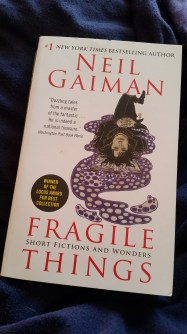
Fragile Things: Short Fictions and Wonders by Neil Gaiman is, as described, a collection of short stories. I often think Neil’s short stories are best read twice to fully absorb, and this collection is no different. 20181215_132531.jpg

While all of these stories are worth reading, there is one story in this tome which every writer should read. It’s a short gem, a few thousand words, in a place where time is fluid. Other People is a masterpiece. You read it, absorbed, hanging on every word. What’s happening is awful, but the protagonist has earned his fate. Then the ending comes, and no matter how many times I read this story, that ending grabs me. There’s nothing to do but flip back to the beginning and read it again, with what you know now. This story is the old ‘song that never ends’, and if you’re not careful you could get trapped in this circular story forever.

Writerly links worth sharing this week:

This guide to fantasy subgenres wowed me with its detail. I learned more than I’d like to admit.

This week’s newsletter from the UK’s Writer’s HQ is NSFW but strangely uplifting in our troubled times, and especially with all the stress of December holidays looming large. Be the duck.

The Antler, the Witch, and the Queen

The witch used an antler to make a sling beneath her cloak and settled the baby inside. She slipped past the guards, beneath the portcullis, and hurried into the forest.

Hours passed before she heard the howls and snarls of the dogs sent to track them. She lay the sling in the snow, removing the girl-child’s swaddling cloths in haste. Her fingers brushed the Mark of Future Ruler on the baby’s belly. The third girl born with the mark. The King and his knights had slaughtered the others for their sex. This one, the witch vowed to save.

The frenzied dogs drew nearer. Rabbits and birds fled past, leaping over the babe in the snow. The witch pulled her magic quickly to her and whispered a spell of shifting.

The baby cooed as she grew from infancy to womanhood in a heart’s beat. The old antler sling made a crown above her head. The witch thought it fitting.

When the dogs arrived they circled, sniffing, round and round, but only a naked woman, a bear, and the fast fading scent of baby remained. The dogs couldn’t read the mark upon the woman’s belly, or see the bear had the old witch’s eyes.

Whining for their lost trail, the dogs scattered into the forest.

“Best stay in this form for now, little one,” said the Witchbear, gathering the woman in her arms.

The future Queen cooed.

The Witchbear reached for the antler. Best keep it. It made a fine crown.

white concrete building interior with antlers hanging
Photo by fotografierende on Pexels.com

Submit Your Stories Sunday: lost science fiction

Welcome to this week’s edition of Submit Your Stories Sunday! Every week I bring you a unique call for submissions to help you find a home for your stories or inspire a new one. Each call will contain a speculative element and will offer payment upon acceptance. Next, I’ll recommend a story to help inspire your submission and finish off with a list of the best writing-related articles I came across this week.

rawpixel-315198-unsplash

Nexxis Fantasy’s Lost anthology

Eligibility: science fiction stories following the theme of ‘lost’ up to 15 000 words.

Take Note: the publisher is looking for non-exclusive rights and will accept reprints.

What makes this call stand out: all profits from this anthology go to support Doctors Without Borders.

Payment: $1.00 per 100 words

Submit by: January 1, 2019

Click here to go to the original call for details.

A Story to Inspire Your Writing:

Instead of a book this week, I thought I’d recommend a short science fiction story to inspire your submission. The Frequency of Compassion by A. Merc Rustad is available to read for free at Uncanny Magazine’s website, and you can click here to go there and read it.

This story is beautiful. I got away from science fiction for a long while and it is stories like this which brought me back in. Space with heart. My stolen heart, in this case. It’s difficult to go in depth of a short story without stealing some of its magic, so all I will tell you is that is a first contact story and it is exquisite. Now, go read it for yourself and be inspired.

sky lights space dark
Photo by Pixabay on Pexels.com

Writerly Links Worth Sharing This Week:

Mythcreants posted an article entitled Taking Character Relationships to the Next Level. Sometimes the oversimplification irked me, but I walked away from this one with a few good ideas.

Masterclass has been advertising that Neil Gaiman will be hosting a writing masterclass in 2019. I’ve put some feelers out to learn more about these ‘masterclasses’ and so far I’m hearing good things from those who have taken them. The writers who got back to me said the classes involve workbooks, assignments, and a great deal of  the host’s process. When I asked what level of writing the classes are best suited for I was told it was up to the writer what they gained from it as it was more method-oriented than theory.  As a fan of Gaiman’s work, I have to admit I’m intrigued.

Happy writing!


IWSG: How to Survive the Apocalypse by Writing

Welcome to the first Wednesday of December! Its time for the Insecure Writer’s Support Group (IWSG), a blogging group created to support and encourage fellow writers. If you’d like to join in and/or see other IWSG posts, click here.

iwsg

This month I’m feeling insecure about this whole Climate Change Apocalypse. What’s the point of honing my writing craft in the face of mortal peril? Scientists can land Insight on Mars but they can’t make people save their damn planet. Ugh. We should have focused our collective imaginations on this apocalypse instead of the zombie one. Why are we still struggling to gain an audience, write our stories, and put them out there if we’re all going to die?

Here’s the thing: we’re not all going to die.

Some of us will live, and when we’re holed up in our bunkers, a dirty collection of bored, dispirited individuals waiting for the world to end or maybe, just maybe, NOT, you know what’s gonna get the survivors through? Canned tomatoes, Spam, wool socks, and stories. Stories are going to pass the time and remind your fellow survivors to be heroes, that life has meaning, and everyday is another chance to save the world.

When the Spam runs out, your story skills might save you from getting eaten, too.

grey skulls piled on ground
Photo by Renato Danyi on Pexels.com

Let’s be honest. You’re going to have to find a way to be more important than say, the surgeon sitting across from you when its cannibalism o’clock. You can provide escape via stories on the daily, she can what? Fix a ruptured spleen? Pssh. How often is that going to happen? Think about it. Humans have been screwing up basic evolution in favor of the short-game for generations now. Ruptured spleens are long-game thinking. A story can make tonight bearable. Who cares if you’re screaming over a kidney stone in four or five years and it attracts starving predators that wipe out your village? Right now everyone misses TV and if they close their eyes, stories are kind of like TV without the pictures and the human brain will hold tight to something that feels like normal.

See? You can survive this apocalypse, but you’re going to have to nail your hook and build tension like a pro. I suggest you start practicing now, while you still have the internet to tell you when you’re doing it wrong.


batch books document education
Photo by Pixabay on Pexels.com

You should also become a story prepper right away. That’s right. Stockpile concepts, practice whipping out a killer first line when you have a spare moment; in the shower, the toilet at work, those precious lost seconds in elevators.

Hone your craft like your life depends on it, because it does. On the other side of the Climate Change Apocalypse, your writing game is going to be AMAZING. Unfortunately, there probably isn’t going to be much of publishing industry, or any industry, left. Which is kind of the planet’s point.

The good news is that throughout history storytellers and bards have been kept around for one reason or another. You’re simply evolving the profession. Try to write on something which preserves well, like stone tablets, birch bark, and cave walls to assure something of your work survives now that the average life expectancy is probably substantially younger than you are in this moment. Don’t think about it. Just. Keep. Writing.