Auguries and autumns

Dear Side Questers,

The name of today’s newsletter, auguries of autumn popped into my head and refused to leave. Sometimes bits of text do that to writers, like they know something we don’t. Fine, I said, auguries it is. But first I’ll have to look it up to be sure I understand the word.

An issue, I’ve noticed, of being a lifelong reader, is that some words become intuitive based on their use and decades later, you realize you can’t explain them. Auguries; as in sooth-saying, fortune telling, etc. So I looked it up, to discover that the original augury was the practice of telling the future by observing birds.

I don’t know if I’m a superstitious person. I do like learning about omens and meanings from a magical, cultural standpoint that appeals to my inner storyteller. Then I remembered that pair of blue jays I mentioned in last month’s newsletter, teaming up to chase a very embarrassed-looking hawk from their territory.

I would very much like that to be an augury from birds.
Banned Book Club is a graphic novel written by Kim Hyun Sook and Ryan Estrada, and illustrated by Ko Hyung-Ju. Set in 1983, this book is based on true events that unfolded when South Korea was reigned by a military regime with heavy censorship rules enforced by torture and murder.
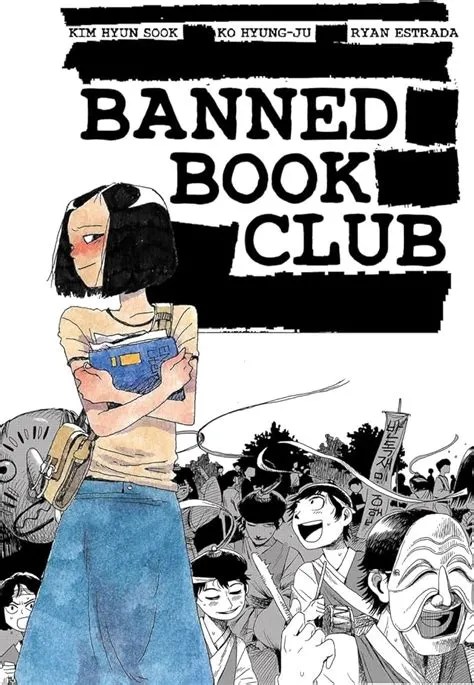
The main character, Kim Hyun Sook attends university for the first time, wary of the student protests all around and everything she’s been taught about them. She soon learns that what she’s been taught is not the whole truth and joins a club for banned books. Illegal banned books, I should point out. Spies are searching for them. Her friends are tortured, all for the ‘relentless rebellion of reading.’

It’s a high adrenaline, fast-paced book that I enjoyed immensely. There was a particular page (31) that stopped me in my tracks when I realized how well it represented current events.
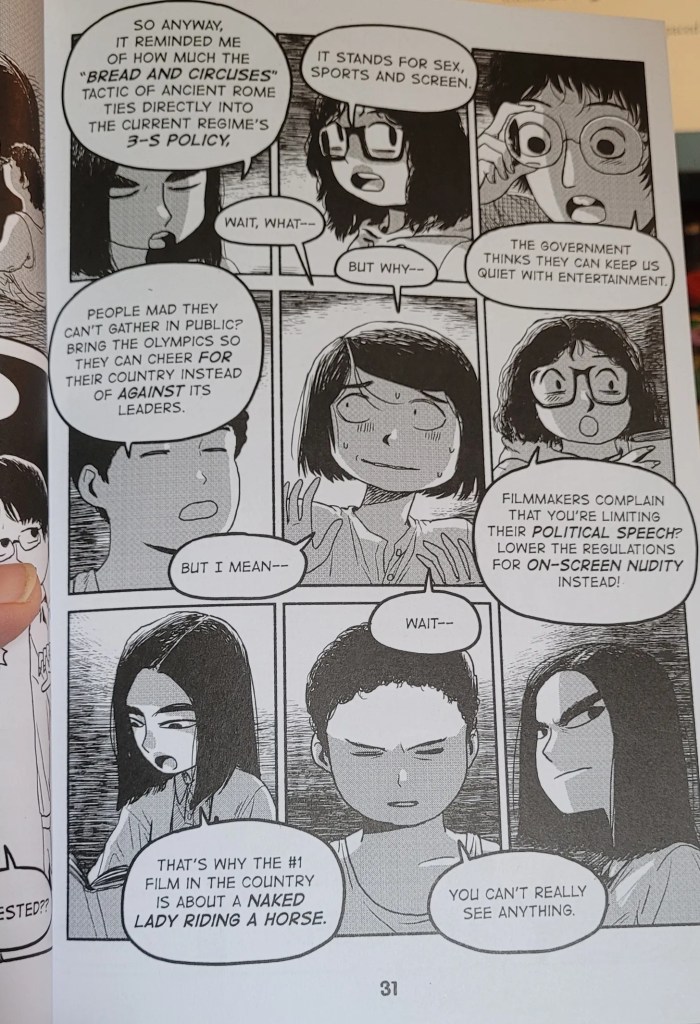
The 3-S’s: sex, sports, and screens. If you plug that into a modern-day context, it can get quite disconcerting. It’s been almost a year that the headlines have been dominated by Epstein Island and the rape of children. More recently, they’ve added the FIFA world cup, “bring the [world cup] so they can cheer for their country instead of against its leaders” (page 31, Banned Book Club). And as for screens, well, you’re looking at one right now.

I read this book when it came up at Red, Wine, and Blue’s (ahem) banned book club, a semi-monthly online book club. The group brought in Ryan Estrada (co-writer and husband to Kim Hyun Sook) to offer a small lecture ahead of the discussion.

The hosts asked him what his reaction was when he found out that his book was being banned from school libraries in certain American states. He explained that his main task was to understand why. It’s a book that has won multiple prestigious awards and has historical value, after all.

What he found out was unexpected. Many of the banned books are culled from a list that is sent out to groups like Moms for Liberty. These groups rarely have time to read the books in question, simply because there are so many, so the list is heavily relied upon.

The hosts mentioned that they’ve heard this from several other of their banned book author guests. There’s a list, their book is on it, and nobody actually read their book to confirm.

I’d like to add a caveat of my own here. In the fundamentalist Christian cult I was raised in, we were always discouraged from reading books that come under scrutiny because they could allow the evil “into our hearts,” sway our faith, and the part that was not said out loud: wreck all the hard work of brainwashing us. We were simply to accept that the books were what our leaders told us they were and preach accordingly. And we did, because that’s what we were trained that faithfulness to god looked like. I strongly suggest that this control tactic has more to do with the books not being read rather than that the lists are simply too long.

In addition, Estrada found that if a book happens to have the first three title words of another book that is on that list, that book will get caught in the net and pulled as well.

All of this, as an author, is infuriating, but it got weirder (puts on conspiracy hat). Remember, this book is based on his wife’s lived experience, so Estrada wants to understand. He keeps digging and follows this list to a private school thinktank (my term, not his) who developed this list to discredit public school libraries, knowing that by selecting a certain type of book, they could get religious groups to do the hard work for them and redirect funding from public into private schools.

This is wild to me as someone who lives in a place where public schools are the norm and private schools are a rarity. But it’s a zoom book club and I’m watching the mostly American audience nodding along like this is common. The upper class weaponizing Christianity to funnel more money their way; a literal medieval tactic still in play. Banning books for greed. Ugh.

If you’re enjoying this banned books content, you might also enjoy my book, Care and Feeding of Your Little Banned Bookshop, a cozy, contemporary fantasy novella about a magical bookshop who delivers banned books to the readers who need them most. Check it out here.
We continue to have fairly regular rain, though I’m cautious to write that “out loud” with another drought raging in Europe right now, looking as brown and brittle as we did this time last year. Our rainwater collection is ridiculous, yet I can’t bring myself to empty the containers that were so precious last year, just in case we anger the gods or what have you.

Here in New Brunswick, the forest is still recovering from the drought, which has been a curious thing to watch. One of the young yellow birch trees (perhaps 10-15 years old) near the spot where we hang our hammocks only leafed out along a single branch this spring, and even those were thin. I think I counted six leaves. Perched on the edge of a steep section of hill, it left a noticeable hole in the canopy, but dead trees are important, too, so we consoled ourselves on the loss and left it alone.

Slowly, carefully, the tree sprouted a few more leaves, close to its center. A few weeks later, a different branch bore a thin stretch of leaves. Then again, and again, as I realized with some wonder that each tiny leaf is playing this massively important role of strengthening its tree enough to push the next leaf, one at a time until they save themselves.

This is the part of the newsletter where I should probably say, never believe you’re too small to make a difference, because you’re not, or even that nothing is ever truly hopeless. But mostly I just want to sit in the wonder of trees for the moment.
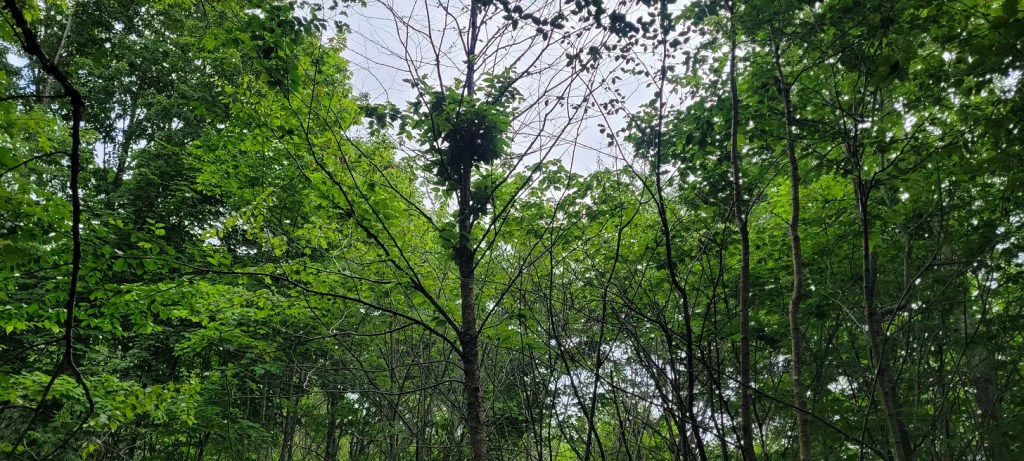
the three that will survive

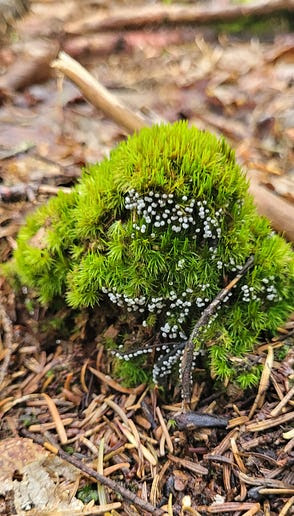
With rain also comes mushrooms, and they’ve been showing off a little extra for having had last year off.
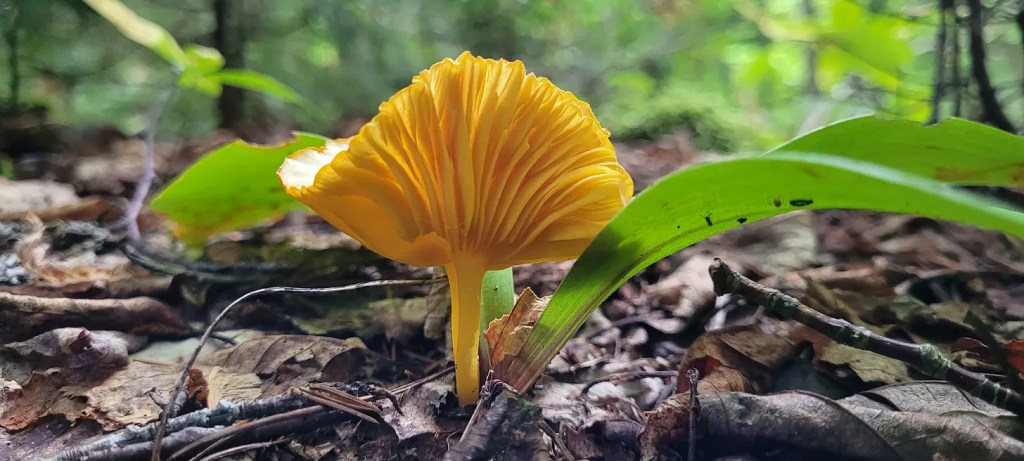
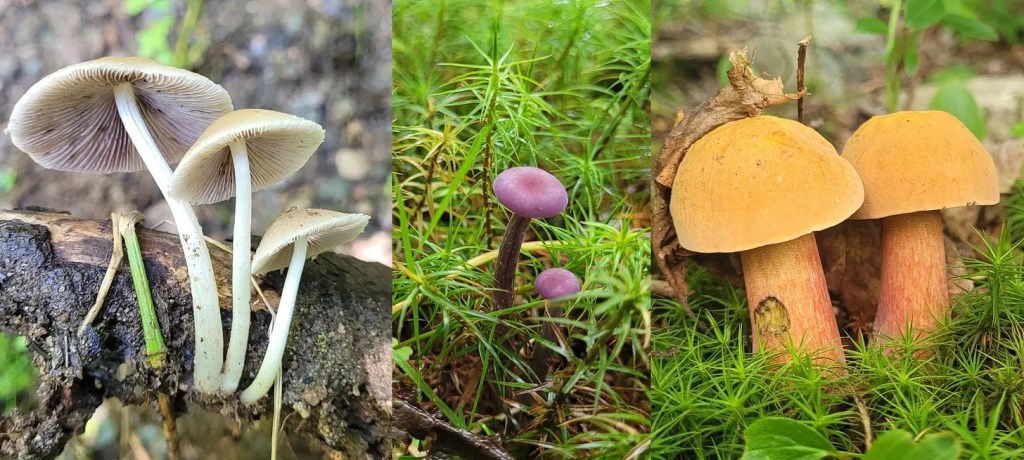
The folds of her gills capture the light like fairy curtains, and there’s something about her that suggests she knows how pretty she is. I never know what to make of this kind of confidence; in people or in mushrooms.

After years of hearing about blue-staining boletes, I found my first, and then dozens more (they are the orange ones to the right in the photo above). In a fit of creativity, I decided to use a stick to stain a poem onto one, which delighted me to no end, but I’m not sure anyone else saw as anything more than someone who wrote on a mushroom with a blue pen. Ah, well.

Then it started to decompose, as all mushrooms do, only I’ve never seen a poem decompose before. Have you?
The article I mentioned last month, that I was hired to write for the 100th anniversary of the Royal Canadian Legion, was published this month. It was an honour to write this, and deeply satisfying to know that, by writing them down, these stories are saved… for now.

The story also coincided with my own research into WWII for my current novel-in-progress, which is now reaching the halfway point. Serendipity! I couldn’t quite believe it when I got the assignment, and I like the way learning these local stories grounded the history for me.

The article is also the most action I’ve ever written! Tank explosions, motorcycle dispatchers being shot off their bikes, and the first Allied member to learn that Hitler was dead was a lady soldier right here at home. ‘Magine! Of course you can read it, too, as it’s available without paywall here: https://www.connectingalbertcounty.org/culture–heritage/heroes-of-albert-county

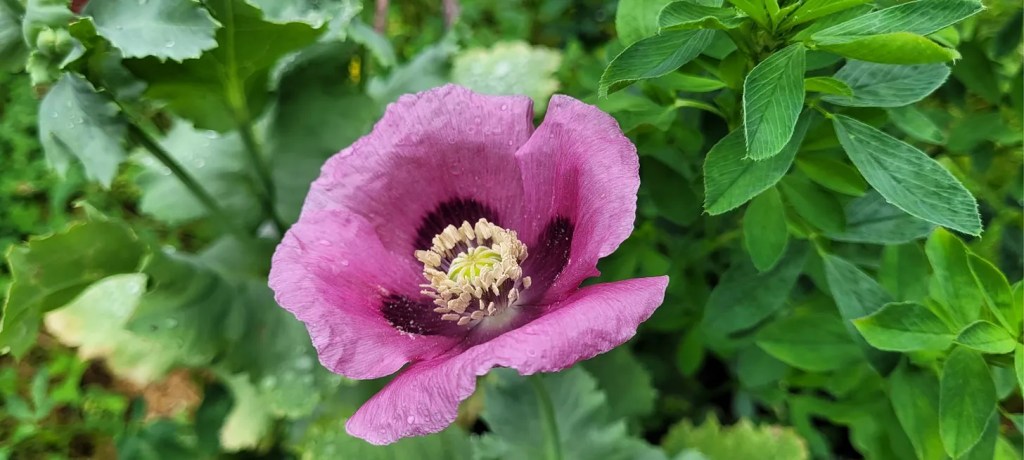
Appropriately, this volunteer poppy bloomed to coincide with the publication, which was another lovely bit of serendipity.
Well, that’s all my news for this month, but what about you? I’d love to hear from you! Simply hit reply or leave a note in the comments with what you’re reading, your summer adventures, or anything at all.

Until next month, stay enchanted, friends.
a signature line has a picture of a woman wearing glasses in front of a writing desk. The words Jennifer Shelby author entangle a stick with a green butterfly resting on it

Anne Frank and blue jays

We almost had a thunderstorm last night. Almost. I sat in my hammock chair in the woods, enjoying the dimming light, the distant rumbles, ready to go inside if anything got close. At this elevation, we are sometimes inside the thunderstorms in a way that’s absolutely, deliciously frightening. Last year we didn’t have any due to the drought, and this year… well, I’m hopeful. I have been tantalized.

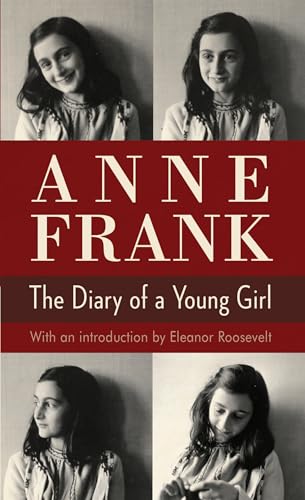
Growing up, I was low-key obsessed with Anne Frank: Dairy of a Young Girl. Part of this was my fascination with anything related to writing, and Anne Frank was a writer. Alongside her diary entries, the book features her fairy tales and short stories. I thought about that a lot in terms of escapism, of seeing yourself through something unbearable. I mean, the utter boredom of spending years in a few tiny rooms with the same people. Hunted and hungry. Staying quiet not just to save your own life, but everyone’s.

It taught me how writing can save a person.

I’ve learned since then that her father edited her entries before publishing, which satisfied one question I’d always had: she never wrote her situation as unbearable. She complains, sure, but there’s never a sense that she might break. Which, given her age, seems like a lot of heavy lifting for her imagination.

So now, burdened with this new knowledge, I reread Anne Frank tentatively, because it’s just as important to me now as it was then that writing can save a person’s mind. That it can still see me through terrible, unbearable things.

I wonder what younger me would say if I traveled back in time and found a way to tell her that Anne Frank: Diary of a Young Girl was being banned from school libraries stateside. She’d know. There’d be none of this frog sitting in the pan while the water was heated up to boiling. She’d know.

If you’ve never read this book, I challenge you to read it this summer. Enjoy the innocence of Anne’s fiction, and she is a good writer, but don’t skip the diary sections, even when they start to feel oddly prescient.

EDIT: A friend pointed out that they’d read The Diary of Anne Frank, but didn’t remember any short stories and fairy tales. After a short jaunt down a rabbit hole, I discovered that my edition of the Diary has Anne Frank’s Tales from the Secret Annex included, while other editions do not. Apologies for any confusion, for I didn’t realize there were different editions on this scale. And I do recommend Tales from the Secret Annex if you haven’t read any of Anne Frank’s fiction.

I’ve been going for more and more walks to stop myself from going online and tapping into a now-constant frustration of the news cycle and what seems like deliberate intention to destroy this beloved planet at this point.

This afforded me the pleasure of seeing two blue jays, two of those raucous birdfeeder villains, in an all-out, admittedly majestic protest at the presence of a merlin. Rather than King Arthur’s magical friend, this was the bird of prey kind of merlin, who feasts on smaller birds. Screaming, insistent, and very much in danger themselves, this blue jay pair refused to tolerate the predator’s presence, swooping and herding it away. The merlin looked embarrassed that there was a witness to its retreat (me). The blue jays, for their part, escorted the merlin well out of their territory, or at least my line of sight, down past the wooded ridge.

My opinion of blue jays was much improved by the experience.

new forest friend. He has a walking stick.

Work continues on my work-in-progress. Deliciously secret work, I’d like to add, after having to give regular updates on my last to satisfy my grant contract. I like sharing, but sometimes I think it breaks my focus.

I did have a fascinating writerly side quest this past month. Hired to play reporter at our local legion’s 100th anniversary and Canada Day celebration, I was privileged to be a part of an intimate audience while family members recounted their father’s and uncle’s experiences in WWII. Better still, I was there because it was my job to write about this event and those experiences.

In a funny bit of serendipity, my secret work-in-progress also deals with WWII. I’m so glad I said yes to this experience.

I need to save the stories for the article, but I’ll happily share that article with you when it’s published.

Until next month, enjoy the dog days coming and I wish you all a pair of raucous blue jays to chase away the predators,

a signature line has a picture of a woman wearing glasses in front of a writing desk. The words Jennifer Shelby author entangle a stick with a green butterfly resting on it

Book Review: The Invisible Life of Addie LaRue

V. E. Schwab’s latest book, The Invisible Life of Addie LaRue, cast a long spell on me. I read it weeks ago now, but I couldn’t manage to articulate what the story had done to me because it was still doing it. I haven’t felt haunted like this since reading Phantom by Susan Kay when I was in my teens.

About 300 years ago, Addie made a deal with a demon in exchange for her freedom. She avoided a marriage she didn’t want, and what she saw as a one-way trip to dying in childbirth. But her handsome demon was something of a trickster, and now, whenever someone looks away from her, she’s erased from their mind. If she pays for a room to sleep, she’s kicked out when the landlord forgets she did so. If she falls in love, they will not remember her the next day, but they might fall in love with her again… and again… and again, until she grows tired of being forgotten. If she sleeps with them, come morning they’ll have forgotten, embarrassed and thinking her a prostitute they’d hired after too much drink. She moves from broken heart to broken heart, stealing food and clothes where she can, and moves like a ghost through history.

Desperate to be remembered somehow, in defiance of the demon who made her like this, she becomes something of a muse, inspiring arts and words and music.

When she meets Henry, she is astounded that someone remembers her at last. They fall in love, and she experiences what a real relationship can be, what it’s like to have a shelter she hasn’t stolen. Through him, at last, she finds the means to be remembered. But.

But.

This isn’t quite the love story one might have expected at the outset. I leave it at that to avoid spoilers, but I will say this: V. E. Schwab managed to transcend romance (this will make sense when you read it) and the ending, which I did not anticipate, is perfect. Addie’s strength of character and will just blew me away.

I will remember Addie. And I highly recommend this book. 4.5 out of 5 stars.

Book Review: Boulders Over the Bermuda Triangle

Peter J. Foote’s debut novella, Boulders Over the Bermuda Triangle, is the third episode in Engen Books’ multi-author Slipstreamers series featuring the adventures of Cassidy Cane. In the series, risk-loving anthropologist Cassidy Cane is hired by one Professor Gamgee to explore a series of portals that may lead anywhere. Think Indiana Jones meets Doctor Who, with the portals acting as TARDIS.

In Boulders Cassidy flies through a portal over the Bermuda Triangle that lands her in deep space. Her aircraft fails and her only hope is what looks like a space station ahead. With a bit of luck, an adolescent, reptilian alien named Agnoix, notices Cassidy’s plight and launches a rescue. What Agnoix doesn’t know is that she’s about to save a human, one of the reptilian Xik’en species’ mortal enemies. Rather than turning Cassidy in, Agnoix decides to fight her learned prejudice and see the human as simply another soul in need of help.

While the youth’s struggle to overcome her cultural bias was my favourite part of this book, there were many other elements that delighted me. Foote knows his way around reptiles and it comes through in his imagined space station: organic tunnels lined with plants and humid, smelly air. He has also employed a clever work around to keep the mining station safe from the asteroid field they work in, but I’ll let you read those details on your own.

I give this book a solid 4/5 and highly recommend this book, especially for Doctor Who fans like me. Which brings me to one more not insignificant detail…

(cue suspenseful music)

I am also writing an episode in this series! Eee! Come back tomorrow for more details!

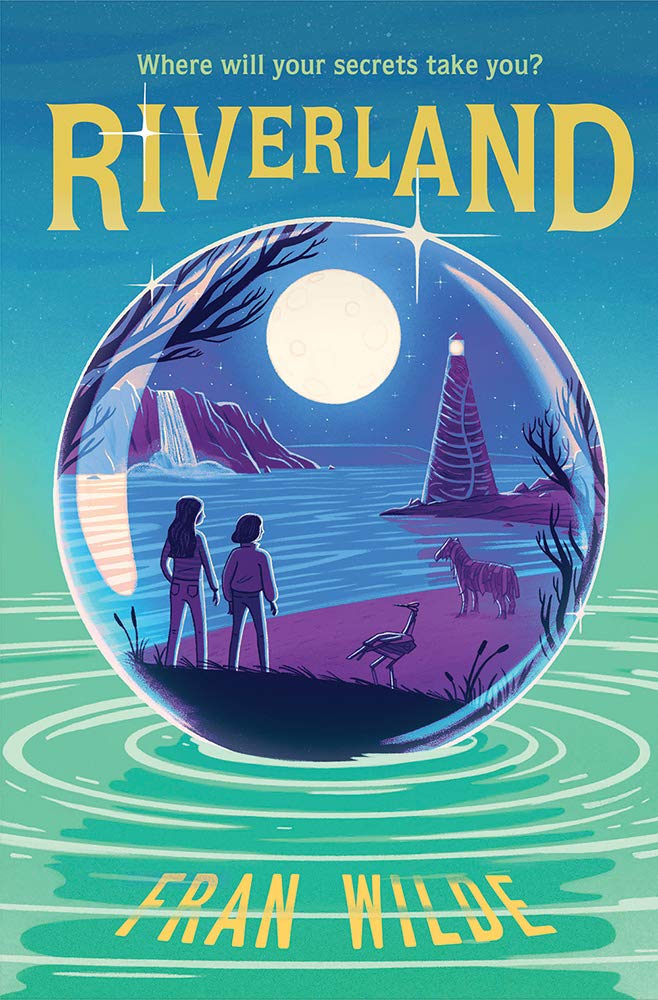
Book Review: Riverland by Fran Wilde

Fran Wilde’s Riverland isn’t a particularly easy book to read, but it is worth it. The difficulty comes from the abuse the young protagonists face. Wilde articulates the constant edge of living in an abusive household, the careful interpretation of every twitch, every air, and every mood, waiting for the monster to appear. There were moments my chest was so tight I swore I’d never put down the book again until it was finished. I couldn’t leave sisters Eleanor and Mike there, I couldn’t leave myself there.

To feel safe enough to sleep, the sisters hide under Eleanor’s bed, where she has set up socks on the sharp coils of the springs, and Christmas lights for cheer, blankets positioned to hide the light from outside their protected space. She’s been reading The Hobbit to Mike, a brief escape, when one night a river appears beneath them, and the girls tumble into another world.

Once inside a strange world of herons, birds, ponies made of rags, nightmares made of smoke, and a lighthouse with a light solid enough to travel by, the girls learn their matrilineal ancestors had promised to protect this place. They’d set up glass fishing buoys to catch the nightmares and stop them from entering the “real” world. The girls know these buoys, they once hung in their house before their father smashed them in a rage.

The girls’ worlds soon collide, the weight of keeping their family’s dark secret against the girls’ mission to save Riverland sending shards of glass into the impossible foundation of their lives. There’s a friend and a grandmother who offer hope, but the girls are in a terrible place. Everything they face is too much for their tender ages. I spent the last third of the book clutching it, white knuckled and muttering, “Oh, Fran, please save them. Don’t leave them there, don’t leave them there.”

I guess I’d call this middle-grade horror fantasy, and it got to the core of me. Protect yourself if this kind of content triggers you, but for me? I give it 5/5 stars.

Book Review: The Drowned Country

The Drowned Country, by Emily Tesh, is the sequel to Silver in the Wood and as such, I cannot properly review it without revealing spoilers regarding Silver, so please, be warned.

The Drowned Country opens upon a bereft and sulking Henry Silver, his grand house a shambles, his mood dark, and Bramble furious with him. Silver is the Green Man now and Tobias has left, called to aide Henry’s mother in her magical work, and their brief romance ended in anger. Heartbroken and still struggling with the new weight of an immortality he’s ill-equipped to handle, Silver is ruled by multiple waves of deep grief.

Then his mother appears, engaging his assistance in the rescue of a girl from a vampire, and he agrees for the chance to see Tobias again. Upon their reunion, Tobias’ stoic exterior plays further tricks on Henry’s tortured mind. When they find the girl, her situation not quite what they expected, Henry catches a glimpse of the Drowned Country, a remnant of fairy land lost, and a sharp spark of hope ignites in his woebegone heart that leads the three of them deep into a world hidden by a dark sea and full of unexpected danger.

I’ll stop there. I enjoyed this novella, missing Tobias myself as much as Henry Silver, but the tone shift from Tobias’ stoic, gentle focus on nature to the twisted torture of Henry’s grief was hard for me, living in Pandemica as we are. It works to get us empathizing with Silver, but I would have given anything to slip into the sweet soothing mind of Tobias for a moment. I begrudgingly took a star off for this, leaving the book with a more than respectable 4 out of 5 stars.

I like the way the story ends, it feels cozy, and there is a reveal and a kindness that pleased my storied heart. Sorry, no spoilers, but this is an easy read in a few short hours to get at that ending on your own. I don’t think you’ll regret it.

Book Review: The Space Between Worlds by Micaiah Johnson

Before we get started, I’d like to put out a content warning about partner abuse in this book. The abuse isn’t gratuitous, it’s pivotal to the plot, and you can’t skip over it. Please protect yourself.

The Space Between Worlds follows the story of Cara, a woman who travels between worlds, quite literally, thanks to a technology that allows her to travel through the multiverse. The caveat to this travel is that should a version of yourself already exist on the world travelled to, you will not survive the initial arrival. Because of this, people who have endured high-risk lives, such as Cara’s impoverished upbringing and life in Ashtown, a town exposed to the harsh elements of a heavily polluted Earth. Cara has died enough times that she is able to traverse to over 300 worlds safely, offering her the appearance of safety in the rich, environmentally-protected city of Wiley. But that protection pivots on the Eldridge company’s need for her particular skills and a secret she must keep at all costs.

In every parallel Earth Cara travels to, she meets different versions of her loved ones. Her mother ranges from loving prostitute to a disapproving zealot, her sister from innocent to cunning. Her once and former lover, Nik Nik, is always cruel, always abusive, and always the Mad Max-like emperor of Ashtown when she finds him. Sometimes he knows her, sometimes he doesn’t, but her Ashtown family remains under threat beneath his rule and their history. When she finds a version of Nik Nik that is not, everything in the all the worlds she thought she knew begins to unravel and Cara discovers that she’s not the only one at Eldridge with secrets.

Johnson’s novel makes for excellent commentary about privilege. The disparity of life between the rich Wileyites and the Ashtowners holds no secrets: we see the trauma of Cara’s lives, the terror of the Runners as a child, the rare kindness she found in the safety of her mother’s brothel. We see the obliviousness of the Wileyites, who have little idea what life is like outside their protected bubble.

I found the abusive sections difficult to read but the ending of this book, oh the ending. It is a breath of beauty, an ending so perfect I had to close my eyes and hug my e-reader for a moment. No, I’m not going to spoil it, but as a writer? This is the kind of ending I aspire to, an ending that takes into account everything that has come before, the story it is telling, and the world that has been built. I give the book 4 out of 5 stars, but the ending gets 6 out of 5.

Book Review: A Song for a New Day

TW for discussion of the pandemic

The weirdest thing about Sarah Pinkser’s book A Song for a New Day is that it was written last year but reads like it’s about this year. The plot follows two paths and characters, beginning with musician Luce Cannon. Let’s have a moment of appreciation for that name. I love it. Luce is a musician about to play her first big stadium gig when terrorism shuts the world down. She still plays, earning her the dubious honour of being the last known musician to play a live show in the future that follows.

Next, we meet Rosemary Laws, years into the digital future, and from her we understand a scarring pox virus hits soon after the bombs, and life changes drastically. The world goes into lockdown and everyone isolates. School goes digital, dating goes virtual, concerts become a virtual, online event, usually through the StageHolo venue, a link in the monster Superwally conglomerate which monopolizes the future. Packages are delivered by drones and thanks to virtual reality tech, life goes on from isolation.

wp-1594392281572.png

This section of the book was enormously comforting to read from my own lockdown and isolation. Many of us are worried about how life is going to look post-pandemic and here is an easily believable future already imagined for us. We survive, and it isn’t that bad at all.

Except.

Sigh.

It turns out that the Superwally’s of the world were making a little too much money off of this new status quo, so much so that they developed a vested interest in keeping people isolated and using their gear. Twenty or so years on, there are congregation laws that dictate people aren’t allowed to meet up in any numbers but there hasn’t been any outbreaks or terrorism in a long time. Luce is heavy into an underground scene of speak-easy like illegal concerts where people attend to experience live music, elements of which never quite translated to the virtual space. The artists chafe against StageHolo’s monopoly of the music industry.

Meanwhile, Rosemary has been hired by StageHolo as a talent scout and is venturing outside her family bubble and meeting people in the real world for the first time, which both terrifies and exhilarates her. She’s about to find out that her safe digital world might be an economic prison fabricated with methods she doesn’t agree with.

This book is a good read, especially from a mid-pandemic perspective. I like that it gave me hope and rang true while also projecting a few cautionary elements that are based in corporate nature. I thought a lot about my musician friends, especially the ones who have been hosting facebook live concerts since March, while I read this book, but I also thought about my own situation.

As a writer, I can handle a degree of isolation without my art suffering for it (unlike Luce). As a mother of young children living in eastern Canada, I’m largely left out of the wider social world of writing conventions, so when conventions went online, I felt like a kid in a candy store. Some aspects of this digital world have far-reaching benefits and I’m not in a place to accept their downsides without a fight. Therefore, the second half of this book made me as grumpy as the first half comforted me. People in similar situations, or people who have disabilities that keep them isolated, may feel the same.

Ultimately, the story wins over my own moodiness. If your mental health is in a place where you can read about a pandemic, do yourself a favor and grab this book. 4 1/2 out of 5 stars.


Book Review: Dreadnought by April Daniels

TW for discussion of transphobia.

April Daniels’ Dreadnought tells the story of Danielle, a transgender girl who happens to be present when the superhero and Legion-member Dreadnought is killed by the supervillain Utopia. Upon his death, the Dreadnought mantle passes to Dani, giving her superpowers but also physically transitioning her to female. Dani’s dreams have come true, but there’s still her friends and family to deal with and when she finally comes out to them, they fail to support her. wp-1593696052282.png

Worse still, when the Legion invites her for a meet-and-greet, she is outed without her persmission and Legion member Graywytch proves herself to be extremely transphobic. Dani leaves, determined to figure out things for herself, and strikes up a friendship with Calamity, a western-styled hero, not super, but with excellent sleuthing and parkour skills. With Calamity’s support, Dani learns how to navigate both superhero-hood and accepting herself for who she is.

Here’s the thing that grabbed me the hardest, reading this book in this time and space. I probably won’t always recognize transphobia on my own but  I believe my transgendered friends when they tell me something or someone is transphobic.  I believe them when they tell me a certain famous magic book author is being transphobic. Heck, I bought this book to support a transgender author while that whole fiasco was happening. But. BUT. This book made everything clear. There’s a scene in which Graywytch goes on a rant about why she despises Dani and everything she is. The story is told from Dani’s perspective, so we see Dani’s exhaustion with hearing these tired, damaging stereotypes over and over again. These stereotypes? Claiming that transgendered women will use their access to female spaces to sexually assault cis women. Claiming that she (Graywytch) will never stop trying to protect her sisters, and in this instance “sisters” is meant in a feminist sense.  Which is exactly what the transphobic author is tweeting. My eyes almost popped out of my head. She could have pulled those tweets straight from Graywytch’s dialogue. And here’s the thing, and why Dreadnought is an important book for cis folks to read, because if you can’t recognize the stereotype for the parroted drivel of hate that it is, who the person who parrots that drivel can hide just how bad what they are doing is.

We need to read books that explore identities outside of our own precisely because they are outside of our own. The powerful awakening that Dreadnought gave me is a fine example of how books can broaden our worldview. Stories are a unique means to live as another person, if only for a time, and that’s a superpower of its own. Obviously, I highly recommend this book, please read it. 5/5 stars.

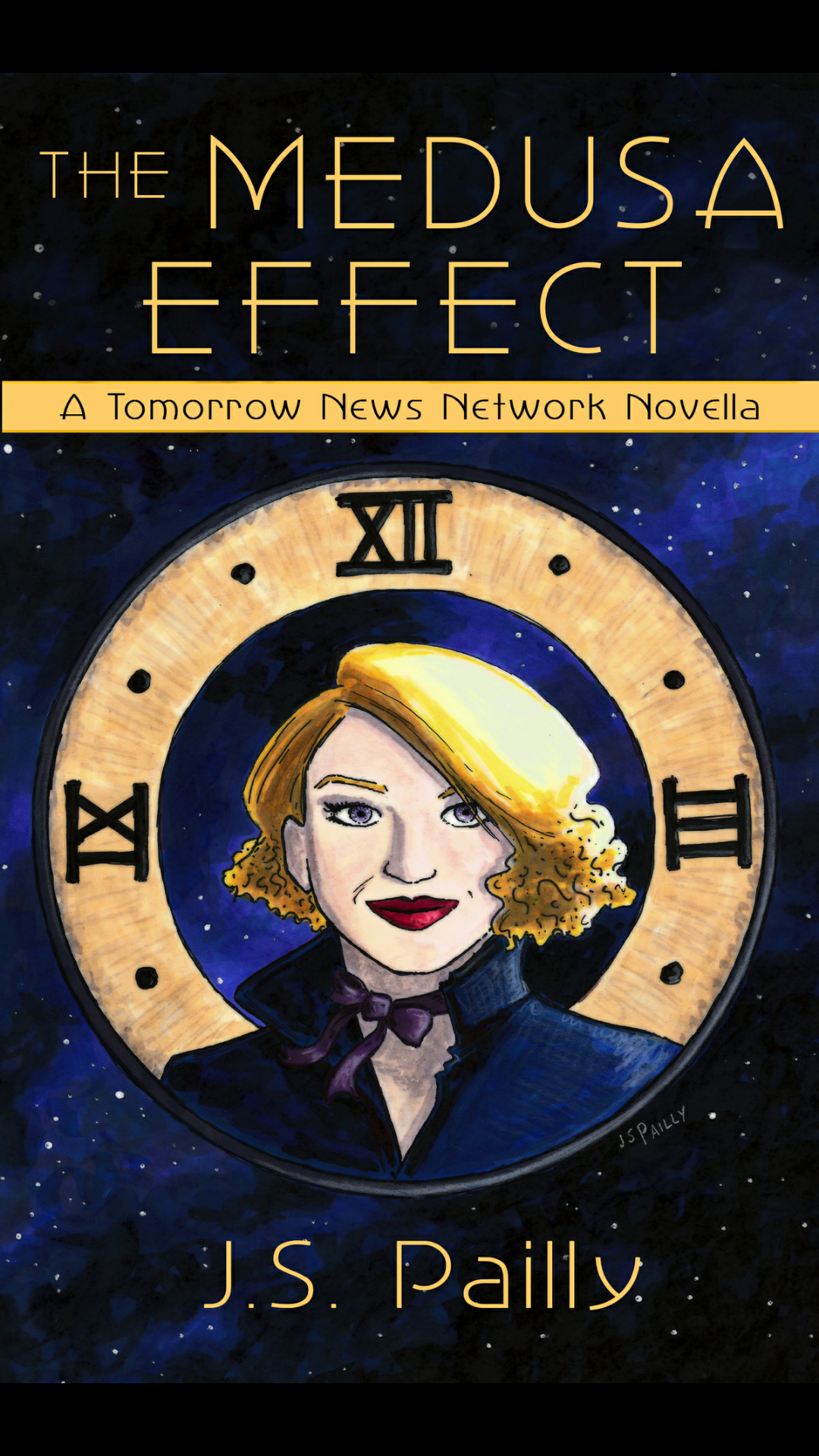
Book Review: The Medusa Effect by J.S. Pailly

I seem to be overcoming my anxiety-related reader’s block. It’s also possible that the compounding anxiety has just cancelled the old anxiety out, welp. All told, it’s good news, because I’m excited about the Medusa Effect: A Tomorrow News Network Novella by J. S. Pailly.

wp-1591375119838.png

I finished this one the same day it came out: it’s that triple-threat of a great premise, easy to read writing, and excellent pacing.

The story’s teenage protagonist, Milo, is something of a screw-up. He lives with his family on a lithium mining colony on a far-flung planet. He has no memories of Earth and struggles with his grades and agriculture duties. When not overwhelmed by the science of the mines, Milo spends his time with his girlfriend Lianna, watching Talie Tappler and the Tomorrow News Network online as they travel through time and space recording the great tragedies, disasters, and events throughout the universe.

When he sees Talie and her cameraman, a cyborg addicted to illegal emotions named Cygnus, at his colony, he knows something terrible is about happen. I’ll stop here before I spoil the story.

Something that stood out to me with Pailly’s writing is the hard science embedded into the story that can easily confuse readers who may be unfamiliar with the more complicated concepts. Pailly glides the reader through these tricky bit with easy to understand explanations and admirable clarity. I suppose this is to be expected from a writer who also publishes a science blog.Click here if you’d like to visit that blog for yourself (I recommend it). Pailly is also a wonderful artist, as demonstrated on his blog and his cover artwork (did I already mention triple-threat? Yeah? Okay, I won’t say it again, then).

The Medusa Effect ends all too soon but there is a also a bonus short story at the end that introduces a rival time-travelling network (!!) and hints of more Tomorrow News Network stories to come. I’ll be first in line for those. I give this one 5/5 stars.

The Medusa Effect: A Tomorrow News Network Novella is currently available as an ebook for kindle. Click here to go check it out.