
She awoke to find the fairies had strewn the raspberries with handmade garlands. She smiled and took a step closer. “You thought we forgot you were coming, didn’t you?” She nodded. It felt good to be back at the cottage again.
She awoke to find the fairies had strewn the raspberries with handmade garlands. She smiled and took a step closer. “You thought we forgot you were coming, didn’t you?” She nodded. It felt good to be back at the cottage again.
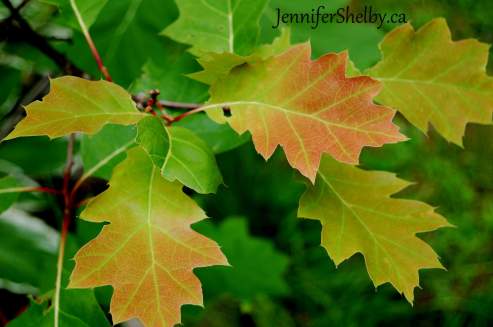
The young leaves were so busy growing they failed to notice they’d forgotten to dress in green. It wasn’t the worst thing in the world, but it reminded the others of autumn and cast a solemn mood as they counted the days remaining in the summer and worried over a chill in the air.
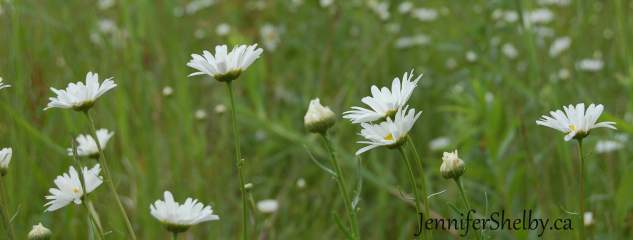
She escaped the drab indoors at last, running through the meadow and throwing herself onto the ground. Giggling, she looked up to the daisies. They nodded their approval. It was a fine day for daydreams.
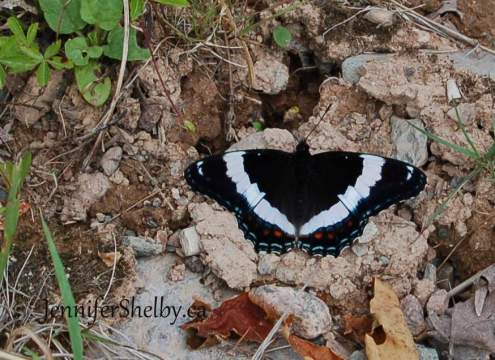
“Oh dear,” he thought as he looked around for something which resembled him enough to camouflage him for a short nap. Everywhere he looked all he saw was green, colourful flowers, or bits of beige earth. It wasn’t easy being black and white in a colourful world.

“A caterpillar got me,” the leaf told the fairy.
She nodded, he was the fifth leaf this morning. “Hold still,” she said as she mixed up a poultice of wild strawberries and spittle bug spit to apply to his wounds. “No dancing on the wind for at least forty-eight hours.”
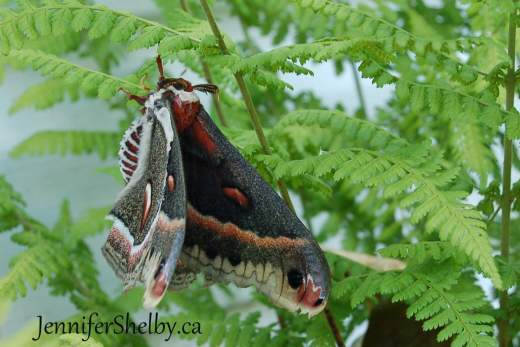
He clung to the fern in desperation, not yet trusting of his wings. They were cumbersome, throwing off his balance as he tried to climb the vegetation. Frustrated, he flapped them almost by accident and felt himself lift into the air. With one last bewildered look, he fluttered off into the air and we never saw him again.
Today, instead of a story, I thought I’d write about the importance of writing every day. Writers hear this advice often, but without a why or a means to do that when the words just won’t come.
Busy is one excuse writers give for not writing, but never has a day gone by when I couldn’t squeeze in a paragraph locked in a bathroom with a pen and paper if I needed to. Hold yourself accountable, put your feet against the door to keep the toddlers (metaphorical and otherwise) out, and get some words down. Do this for yourself, and do this for your work. You’ll feel your powers of expression get stronger in just a few weeks.
I keep myself to a hard schedule. I expect myself to write a minimum of so many thousand words per month. This works for me. To meet my goal, I need to write every day without exception. This has also taught me that I write my best when I write every day. I don’t have to hunt for the right phrase to say what I want to say or pause to catch an elusive word; they are all right where they should be, on the page. They’ve been trained. The ideas flow in thoughtful progression and I don’t get stuck on what should happen next.
This doesn’t mean that I, or even any other writer who insists on writing every day, has some brilliant story to work on every single day. Oh, no, no, no, no. Some days are the hair of the dog, days when the words are venomous and cruel and the last thing I want to do is fight with them. Other days I am feeling so profoundly discouraged that working on a story would flavour it with an inappropriate darkness. Those days I put the stories aside, and find other work to do. Exercises to do.
One of my favourite exercises is to click onto google search and find people. National Geographic is a treasure trove of interesting faces in situations which grab hold of a writer’s imagination. The trick is to find one which fascinates you to the point that it feels like a delight to write about her/him. Take, for instance, this gentleman (photo credit: Andrey Pavlov, via National Geographic):
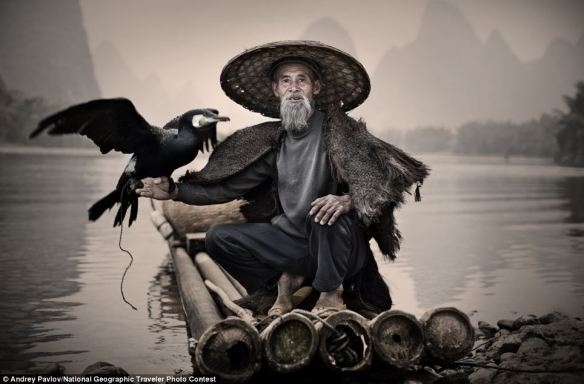
His story leaps out of the photograph, unique to the viewer. First, describe him. Get to know his face as you paint it with words, and as his life unfolds, allow your imagination to build his world, the details of his life. What begins as description moves into a character sketch and perhaps it will grow into something else as well. The point is letting go and allowing the words to guide you, of honing the writing instinct and finding your voice as you tell someone else’s story.
Writing about people in other cultures is a delight. It feels like play to slip out of my own comfortable culture for a while and feel life anew. You may not understand every detail of how that culture works, but this doesn’t matter for the exercise. You can research later if you want to publish, or he can live on an alien world if he needs to. This is writing. You can make it work. For now, just write.
When you’re done you have something – and someone – new. You have a character that has been developed, waiting until a story comes along he’ll fit into like he was meant to be there all along. Perhaps the story you’ve created is compelling enough for a unique work of its own. Or maybe you’ll never use him again, but you still got some writing in on a day that may have gone to waste. You practiced and you wrote today. And I bet you even had a little fun.
Good luck writers, I can’t wait to read you,
P.S. What sort of tricks do you have to make the words flow on the bad days?

My daughter’s hand was warm and sweet inside my own as she peered into the dark forest. “It’s not as dark as I thought it would be,” she announced.
I tried to point out the fireflies among the wildflowers, but her eyes never left the seldom-seen stars of the hazy night sky, devouring them with her entire being. “Wow,” she whispered, transfixed.
We walked further along the wooded lane, with her looking over her shoulder now and again to make certain that the moon was still there. “It’s my friend, the Moon.” She would say this in a whisper, only to shout “Hi Moon!” and wave to the jolly orb. Now and then he winked at her with wisps of fog, much to her delight.
A green firefly lit up in a patch of clover not far from us. She gasped. “A firefly!” The green light flashed again, and again, as she counted…poorly.
“I want to see another one mummy!” she said. So we circled our lawn, traipsing through the wet grass as we watched for fairy lights in wild places.
“We have to whisper, and tiptoe. Whisper and tiptoe.” She hissed the words as she stomped through the wet in her beloved rubber boots.
She squeezed my hand tight as a moth flew too close to her face and they startled one another, but it’s easy to be brave when you’re old enough to be out in the dark and your friend the Moon is right there and your mummy is holding your hand. “What was that?”
“It was a moth.”
“Was it a fairy moth?”
“It might have been, it’s hard to tell in the dark.”
As we neared our little pond a handful of fireflies whispered their luminescent greetings and we settled in to watch their frolic of twinkling phosphorescence. Some nestled in the devil’s paintbrush, while the bolder ones soared as high as the branches of the nearby trees. Her eyes, glazed with the sleepiness of one who is usually in bed before dark, looked back up to the stars in wonder.
In sitting still the mosquitoes discovered us and began their most irritating feast. We swatted dutifully for a little while, until finally she suggested we go back inside. Hand in hand we walked back to the house. “So what did you think of the fireflies?” I asked her.
“I thought there’d be less bugs. And more faeries,” she said, “But I liked them very much.”
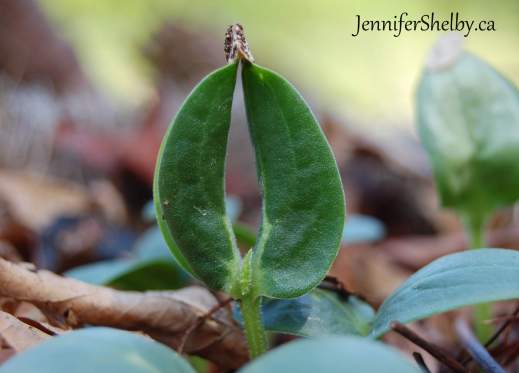
The confused seedling raised his wings to fly.
The other seedlings stared.
He blushed. “Namaste?”
“Seedlings can’t fly,” they told him.
So he flew away. No need for that kind of negativity.
 Jennifer Shelby